Impact Assessment of US Tariff Threat on Indian Healthcare Export
Dr. M Aamir Mirza, Jamia Hamdard
The Indian pharmaceutical export has been exempted in the current reciprocal tariffs by the U.S., while the medical device industry falls within. All the markets have started resetting their business-like U.S. pharma giants are working to increase their manufacturing capacities, the government of India has started strengthening the sector through the schemes (like PRIP, PLI and promotion of medical device parks) and bilateral trade agreements by different countries.
The ongoing tariff fusillades and retorts by economies like China have precipitated several conundrums and made the trade future nebulous. The flat 26 percent reciprocal tariff across the sectors also includes medical devices. The pharmaceutical sector has been kept exempt. The current tariff on Indian drugs to the U.S. is zero, while the tariffs on U.S. medicines by India are 0 percent to 10 percent. The reason behind it is much more obvious. India is one of the largest suppliers of generic medicines (around 80 percent of the US pharmaceutical market) to the US (i.e., around $9 billion), which includes diseases like diabetes, hypertension, hypolipidemia, CNS disorders, and infections. Drug products from Indian companies had offered around $219 billion in savings to the U.S. healthcare system in 2022, according to a study by IQVIA. In the given circumstances, the U.S. is not in a position to jeopardize its domestic pharmaceutical supply chains. On the other hand, U.S. views India as a counterbalance to China in the Asia-Pacific region. It might be a far-fetched idea to have independency for the pharma sector too but it is difficult to erect such a large-scale domestic production capacity in a cost-effective manner in the near future, which requires around $2 billion and 5-10 years of investment. But the American pharma giants like Novo Nordisk, Eli Lilly and others have started working on increasing the production capacities within America. It is also a truth that around 30 per cent of the pharma export business to India comes from the U.S. but bilateral agreements from other regions (like European union, ANZ, Latin America and RoW) are open to compensate and the companies should diversify and de-risk their operations. There is a rough estimate that India produces around 60,000 generic brands across 60 therapeutic areas.
The medical device sector has a different scenario. The previous tariffs to the Indian medical device exports to the U.S. ranged from 0 per cent to 6 per cent, in the categories of low-value, high-volume products. The tariff imposed by India to the U.S. on most of the top ten products is 7.5 per cent, with a tariff of 10 per cent on the gas analysis apparatus and 0 per cent on chromatographs and mass-spectrometers (high end equipment used in hospital laboratories). This sector in India is still fledgling and expected to be impacted adversely. The government of India is considering to address the trade barriers on the U.S. medical device products in exchange of the greater accessibility of the Indian pharma products to the American market. On the other hand the government of India is already working to strengthen the sector through the schemes like PRIP (Promotion of Research and Innovation in Pharma MedTech Sector), PLI (Production Linked Incentive) and promotion of medical device parks. But still India's exports of medical devices to the U.S. are much lower than imports, which could be further worsened by the new tariff. In 2023-24, India's medical device exports to the U.S. was around $714.38 million, while imports from the US to India were around $1,519.94 million according to the data shared by Exports Promotion Council of Medical Devices. The major products being exported to the U.S. from India are- Polyethylene bags, catheters, artificial joints, surgical knives and spectacle lenses. While India imports MRI machines, CT machines, artificial joints, gas analysis apparatus, mass spectrometers and orthopaedic or fracture appliances.
It is not true that it is only the tariff which would impact. To add verisimilitude into the discussion, we must admit that there are non-tariff barriers also like regulatory procedures, cost of entering into the U.S. market and inherent challenges of scaling up the facilities.
For China the tariff is 34 per cent, Europe 20 per cent, Indonesia 32 per cent, Japan 24 per cent, Malaysia 24 per cent, South Korea 25 per cent, Switzerland 31 per cent, Taiwan 32 per cent, Turkey 10 per cent and Vietnam 46 per cent. So, an astute move can prove a breather in the given scenario. A difference of 8 per cent tariff compared to China can be exploited in exporting low risk, high volume and less R&D intensive products like surgical blades and syringes. It will also be interesting to see that how U.S. addresses the challenges of routing the products through low-tariff countries. Procurement and stocking up the major raw materials from other stringent markets is also being observed during this period of uncertainty. The repercussions of the ongoing trade war may affect innovations also. The prevailing uncertainty, dwindling profitability and investment in erecting new facilities would thwart the innovation pipelines.
The U.S. government estimates an increase in export worth $5.3 billion annually if India relaxes different trade related barriers across the sectors.
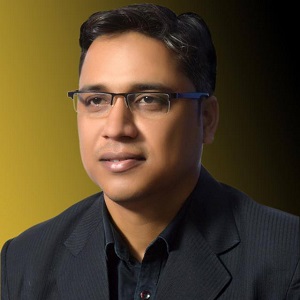
Dr. M. Aamir Mirza is working as an Assistant Professor in the Department of Pharmaceutics, Jamia Hamdard, an NIRF Rank 1 institute and a NAAC ‘A+” grade deemed to be University. He has a multifaceted career portfolio adorned with both industry and academic accomplishments. During his industry stay he became a seasoned scientist and dealt with challenging NCE/NDA development. He is on advisory boards of some international research-based companies of India, New Zealand and Europe. Academics and Research being close to his heart, he has published more than 110 manuscripts in the journals of international repute and has been granted 02 Indian patent and filed for 04. He has contributed several chapters in books published by reputed authors like Elsevier and Bentham. He is amongst the very few scientists globally who has an expertise in Humic substances research. A well-travelled scientist; he has delivered scientific addresses in countries like USA, Austria, Japan, Netherlands, Turkey, Estonia, Spain and Russia. He has been Elite Fellow at University of Malaya (Malaysia) for the last 5 years where he takes classes on the topics related to industrial pharmacy.